

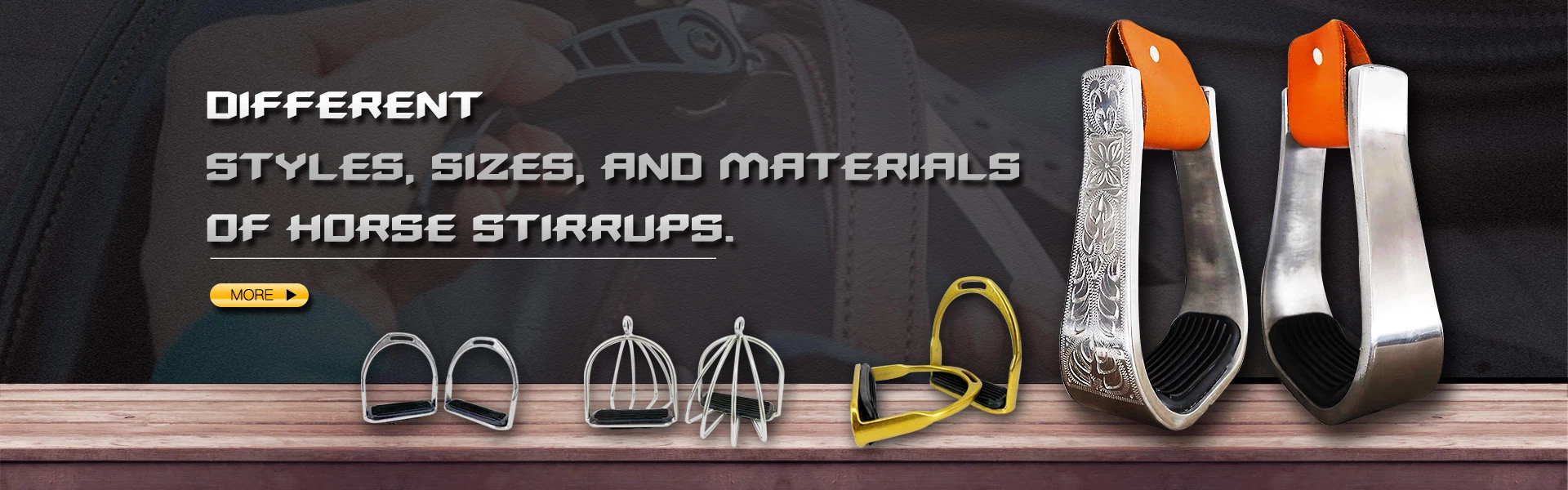
Safety Stirrups Buying Guide: Four Essential Factors Every Rider Must Know
In equestrian sports, safety stirrups serve as the first line of defense for rider protection. Unlike conventional stirrups, these specialized designs enable quick foot release during emergencies, dramatically reducing drag risks during falls. This professional guide breaks down the critical considerations for selecting the right safety stirrups.
1. Understanding Release Mechanism Technologies
The market currently offers three dominant safety release systems. Magnetic release systems maintain connection through calibrated magnetism, automatically separating when force thresholds are exceeded. Mechanical spring mechanisms rely on tension-based triggers for detachment. Gravity-sensing designs activate through angle displacement. Competitive riders typically favor responsive magnetic systems, while recreational equestrians often prefer straightforward mechanical alternatives for their reliability.
2. Material Selection: Performance vs. Practicality
High-grade engineering polymers and aircraft-quality aluminum represent the two primary material categories. Engineering plastics excel in corrosion resistance and lightweight properties, ideal for humid training environments. Aluminum alloys demonstrate superior stability under extreme temperature fluctuations, making them preferred for professional competitions. Notably, select premium manufacturers now incorporate carbon fiber composites, achieving unprecedented strength-to-weight ratios.
3. The Science of Size Compatibility
Stirrup width should exceed boot sole width by approximately 1-1.5 centimeters. Excessive width compromises control precision, while insufficient clearance increases entrapment hazards. Industry standards recommend 12cm inner width for adult females, 12.5-13cm for males. Children-specific models require age-based segmentation-riders under eight years should utilize narrow designs below 10cm.
4. Maintenance: The Hidden Cost Factor
Safety release mechanisms demand regular maintenance. Post-ride debris removal with soft brushes and quarterly sensitivity inspections for springs or magnets are essential. Most manufacturers recommend professional assessment every two years, reduced to annually for high-frequency users. Neglecting maintenance risks release failure during critical moments-a commonly underestimated factor among novice riders.
Conclusion: Safety stirrup selection should never rely solely on pricing or aesthetics. Instead, evaluate riding frequency, arena conditions, and horse temperament collectively. Investing in authoritatively certified safety equipment represents the fundamental respect for personal wellbeing. Professional fitting trials under expert guidance ensure the optimal safety triangle between rider, equipment, and horse.