

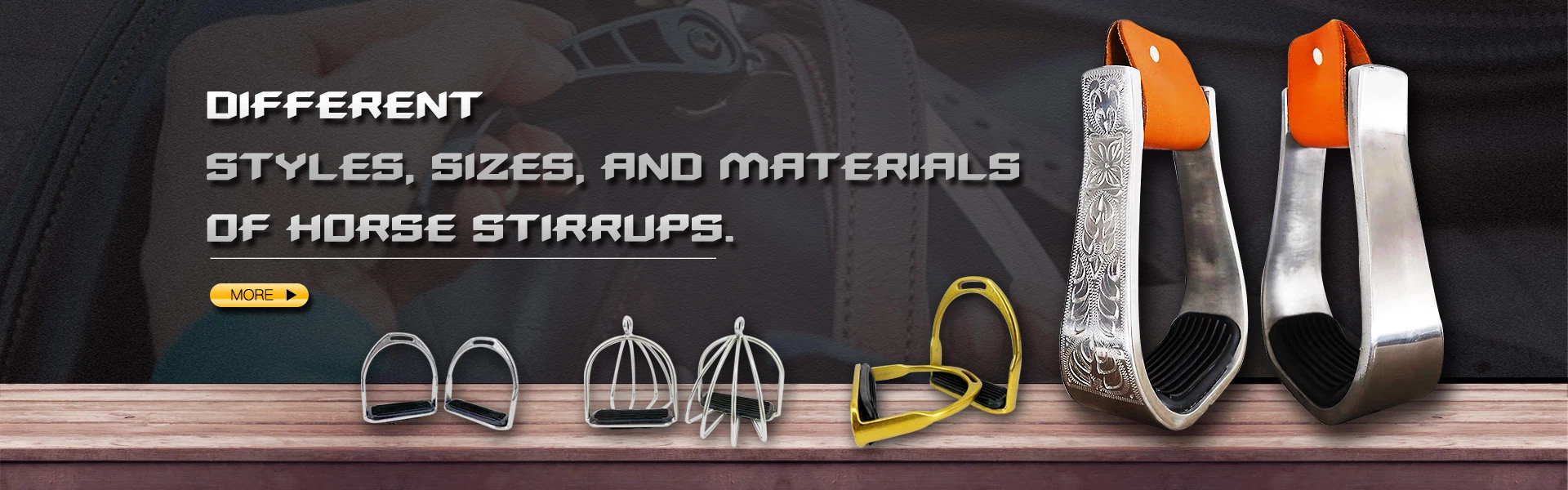
The Equestrian Safety Revolution: A Deep Dive into Modern Safety Stirrup Technology
Throughout the centuries-long evolution of horsemanship, the emergence of safety stirrups represents a revolutionary breakthrough. This seemingly simple metal device actually embodies the convergence of materials science, ergonomic design, and sports biomechanics.
Traditional Stirrup Safety Hazards
Early stirrup designs carried significant safety flaws. When riders accidentally fell, their feet could become trapped, leading to severe dragging accidents. Statistics from the 1990s revealed that stirrup-related design defects accounted for over 15% of all equestrian injuries. This alarming data compelled manufacturers to re-examine stirrup safety performance fundamentally.
Core Technologies in Modern Safety Stirrups
Contemporary safety stirrups incorporate multiple innovative designs. Magnetic safety systems utilize precisely calculated magnetic field strength, ensuring stability during normal riding while enabling quick escape during emergencies. Hinged-side designs provide additional evacuation routes during critical situations while maintaining structural integrity.
Materials science advances have also propelled safety stirrup development. The application of aerospace-grade aluminum alloys allows stirrups to reduce weight while maintaining excellent mechanical properties. Several premium brands have even adopted titanium alloy materials, further enhancing product durability and corrosion resistance.
Market Trends and User Experience
In recent years, the safety stirrup market has shown clear technological differentiation trends. Entry-level products primarily focus on basic safety functions, while high-end products integrate intelligent elements. Some brands have introduced customizable products with adjustable magnetic force strength to meet individual rider needs.
User feedback indicates that quality safety stirrups not only enhance riding safety but also significantly improve rider confidence levels. Many professional coaches report that students using safety stirrups demonstrate lower anxiety levels and faster skill acquisition during learning processes.
Future Directions for Technological Innovation
Looking ahead, safety stirrup development will emphasize intelligence and personalization. Smart stirrups integrated with sensors can monitor rider pressure distribution and balance status in real-time, providing data support for training. The application of 3D printing technology also makes customized production possible, allowing each rider to obtain stirrup products perfectly suited to their physiological characteristics.
The rise of environmental consciousness is also influencing safety stirrup design directions. The use of recyclable materials and the introduction of modular design concepts enable more comprehensive product lifecycle management.
The evolution of safety stirrups demonstrates that even the most traditional equestrian equipment can achieve qualitative leaps through technological innovation. With continuous development in materials science and intelligent technology, we can confidently believe that future equestrian sports will become safer, more comfortable, and more efficient.