

Horse Hardware
This equipment includes such items as saddles, stirrups, bridles, halters, reins, bits, and harnesses. Equipping a horse is often referred to as tacking up, and involves putting the tack equipment on the horse. A room to store such equipment, usually near or in a stable, is a tack room.
Advantages of Horse Hardware
Durability
Horse hardware is designed to withstand the weight and strength of a horse, making it highly durable and capable of lasting a long time.
Compatibility
Horse hardware is designed to be compatible with other equine equipment, making it easy to integrate into an existing collection of gear.
Performance
The use of properly fitted and designed horse hardware can improve a horse’s performance, whether that be in competition or everyday use.
Aesthetics
Many horse hardware options are available in aesthetically pleasing designs and colors, adding to the overall appearance of the horse and rider.
-
![Security Snap 1 In. Swivel]() Security Snap 1 In. SwivelSecurity Snap 1 in. Swivel Manufacturer: Qingdao Bothfine Feature: Security Snap 1 in. Swivel Feature: The Security Snap with a 1 in. swivel is a durable and versatile snap hook designed for use...read more
Security Snap 1 In. SwivelSecurity Snap 1 in. Swivel Manufacturer: Qingdao Bothfine Feature: Security Snap 1 in. Swivel Feature: The Security Snap with a 1 in. swivel is a durable and versatile snap hook designed for use...read more -
![Brass Buckles]() Brass BucklesA professional hardware manufacturer for Belt buckles, Metal arts and crafts gifts, Saddlery hardware, Pet accesories, Bag accessories…etc.read more
Brass BucklesA professional hardware manufacturer for Belt buckles, Metal arts and crafts gifts, Saddlery hardware, Pet accesories, Bag accessories…etc.read more -
![Brass Snaps]() Brass SnapsFactory price solid brass snap hook swivel snap hook clip carabiner for dog,horse leash DIY Leather craftsread more
Brass SnapsFactory price solid brass snap hook swivel snap hook clip carabiner for dog,horse leash DIY Leather craftsread more -
![Horse Saddlery Hardware]() Horse Saddlery HardwareOur main products include all kinds of Buckles, Snap hook, Carabiner, D ring, O ring, G hook, Tri glide, Tag, chains, Rivets…etc.read more
Horse Saddlery HardwareOur main products include all kinds of Buckles, Snap hook, Carabiner, D ring, O ring, G hook, Tri glide, Tag, chains, Rivets…etc.read more
“Quality First! Customer first!” is our principle....


Why choose Us
High quality
Our products are manufactured or executed to very high standards, using the finest materials and manufacturing processes.
One stop solution
From the begining inquiry and throughout the entire process until you receive the goods. we are dedicated to supporting you every step of the way.
Quality control
We have professional personnel to monitor the production process, inspect the products and ensure that the final product meets the required quality level standards, guidelines and specifications.
24h online service
You can contact us to inquire about pre-sales, sales, and after-sales services, and we will give you a very satisfactoryWe are at your service online 24 hours a day.
Types of Horse Hardware


Saddle
This may be one of the most familiar pieces of horse tack to new riders — it serves as your seat while on the horse. Saddles are made to fit both the horse and the rider, and saddles need to be measured properly for safety and comfort.
Saddle pads
These are worn under the saddle to provide cushioning for your horse. They keep dirt and perspiration at bay and prevent the saddle from rubbing against your horse, causing heat build-up. Saddle pads also protect the saddle. Be sure to check out our English saddle pad guide to find the right pad for your discipline.
Girth
A girth is a band running under the horse’s belly that attaches to the saddle to keep it in place.
Breastplate
A breastplate is a harness-type structure sometimes used to keep the saddle in place, preventing the saddle from slipping too far back. It has straps that extend around the sternum and forelegs of a horse.
Bridle
A bridle is worn over a horse’s head and used for communication when riding. A bridle includes four parts: crownpiece, noseband, headstall, and cheekpieces. A martingale is attached to the noseband when used.
Bit
The bit is a metal piece that attaches to the bridle and sits in the horse’s mouth used for communication. There are many types including snaffle bits, pelhams, kimberwicks, and D ring bits.
Halter
A halter is worn over a horse’s head used when grooming, shipping, and when turning out a horse. It’s similar to a bridle. However, since it is not used with a bit, it is not intended for riding. Check out our riders’ guide to horse halters for expert tips on choosing the right halter for your horse.
Lead rope
A lead rope is used to guide a horse or to tie up a horse.
Reins
Reins are the straps that attach to a bridle used for a rider to direct a horse while riding.
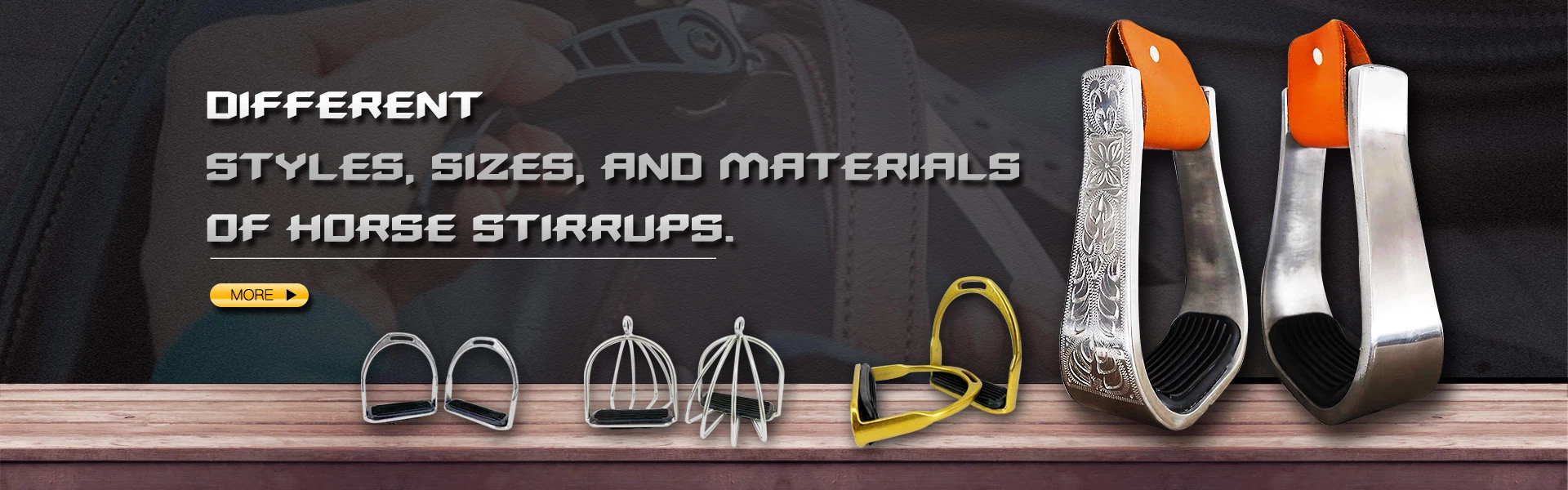
Stirrup irons and stirrup leathers
Stirrup irons are the metal rings where you place your feet when riding a horse. Stirrup leathers are attached to the tree of the saddle under the skirt and are what holds the irons in place.
Protective legwear
These protect a horse’s lower legs from injury. Protective legwear is available in many types, including polo wraps (also called polos), tendon boots, brushing boots, and cross country boots.
Material of Horse Hardware
Stainless steel
This is a common material used in horse hardware due to its durability, rust resistance, and long-lasting shine.
01
Brass
This material is also popular for horse hardware, especially in show gear, because of its aesthetically pleasing appearance and durability.
02
Aluminum
This is a lightweight option for horse hardware that is commonly used in racing and sports equipment.
03
Nylon
This is a synthetic material that is often used in horse halters, lead ropes, and other types of horse gear due to its strength, durability, and resistance to wear and tear.
04
Leather
While not a metal or synthetic material, leather is a popular choice for horse hardware, particularly in bridles and saddles, due to its natural flexibility, durability, and comfort for the horse.
05
Application of Horse Hardware
Bridles
These are horse headpieces that riders use to control the animal, particularly during riding. Bridles consist of a bit, reins, cheekpieces, and headstall.
Stirrups
These are metal frames that hang from the saddle's sides that riders use to put their feet in. Stirrups provide the rider with balance and support during the ride, as well as leverage for control.
Bits
These are pieces of metal that go into the horse's mouth and are attached to the bridle. Bits are of various shapes and designs, with the twisted, snaffle, and Western styles being the most commonly used.
Halters
These are headpieces that are worn by horses when they are not being ridden. Halters are adjustable and provide a way for handlers to fasten lead ropes and tie the horse.
Reins
These are equipment that attaches to the bit and the rider's hands, providing a means of steering and controlling the horse.
Girths
These are straps that go around the horse's girth to keep the saddle in its place. Girths are adjustable and come in different designs to suit the horse and the saddle.

Process of Horse Hardware
Research and design
Horse hardware designers typically start by researching market trends, materials, and customer feedback. They then create prototypes to test and refine their designs.
Material selection
Once a design has been finalized, manufacturers select the appropriate materials for each component of the hardware. This often involves choosing between different types of leather, metal, and synthetic materials.
Production
The selected materials are cut, assembled, and stitched together to create the final product. This process may involve both handcrafting and machine work.
Quality control
Before the hardware is shipped to customers, it undergoes a rigorous quality control process to ensure that it meets industry standards and is free of defects.
Distribution and sales
Finally, the finished hardware is distributed to retailers or sold directly to customers through online or brick-and-mortar stores.
Components of Horse Hardware
Bridle
A headgear that goes over the horse's head and is used to control the horse while riding. It includes a bit, reins, and a headstall.
Saddle
A seat-like structure that is placed on the horse's back for riding. It provides support, stability and comfort to both the horse and the rider.
Stirrups
Footrests that hang from the saddle and provide stability and support to the rider during riding.
Girth
A strap that goes around the horse's belly to hold the saddle in place.
Bits
A metal mouthpiece that goes into the horse's mouth via the bridle and is used to control the horse's movements.
Reins
A long strap attached to the bit and the bridle and used to control the horse's movement.
Headstall
The part of the bridle that runs behind the horse's ears and holds the bit in place.
Breastplate
A strap that goes across the horse's chest and is attached to the saddle to prevent it from slipping backward.
Martingale
Used to control a horse's head carriage and prevent them from raising their head too high.
Halters
A headgear that covers the horse's head and is used to lead or tie the horse.
Maintenance of Horse Hardware
Regularly inspect your equipment
Check your horse hardware regularly for any signs of wear and tear, damage, or weakness. Replace any broken pieces immediately. A thorough cleaning should also be done on a regular basis.
Clean and oil your equipment
Clean your horse hardware with soap and water and a soft brush. Dry it with a towel or air dry. Then, apply a thin layer of oil to protect the metal from rust or corrosion.
Store your equipment properly
Store your tack and equipment in a clean and dry area. Avoid leaving your equipment in direct sunlight or extreme temperatures. Ensure your equipment is properly hung and secured to avoid damage.
Use appropriate cleaners and conditioners
Avoid using harsh chemicals or cleaners that can damage your hardware. Use conditioners specifically designed for your leather equipment.
Avoid overusing your equipment
Overusing your hardware can result in wear and tear, making it more prone to damage. Give your equipment a break to avoid fatigue.
Replace worn-out hardware
When your equipment is worn beyond repair, don't hesitate to replace them with new, high-quality ones. This will ensure that you and your horse are safe and prepared for any riding situation.
How to Choose Horse Hardware
Material
Horse hardware generally has stainless steel, iron, copper, aluminum and other materials to choose from. Different materials of horse hardware have different strengths and durability, and you need to choose the appropriate material based on the required scene and frequency of use.
Installation methods
Horse hardware has various installation methods, including screw fixing, pasting, clamping, etc. You need to choose the appropriate installation method based on the required functions and actual installation environment.
Size specifications
Different horse hardware has different sizes and specifications. You need to choose the appropriate size specifications according to the actual needs.
Processing technology
Different processing technologies will affect the quality and appearance of horse hardware. You need to choose a processing technology with reliable quality.
Brand and price
Brand and price are also factors that need to be considered when choosing horse hardware. You can choose trustworthy brands and suitable prices to buy horse hardware products that suit you.

Saddlery refers to the manufacturing and repairing of saddles, bridles, reins, stirrups, and other horse riding equipment made of leather or synthetic materials. Harness, on the other hand, refers to the set of straps and other equipment that are used to attach a horse to a vehicle or to carry loads. It typically includes a collar, traces, breast collars, breeching, reins, and other accessories that allow for the safe and comfortable transportation of goods or people by horse-drawn vehicle.
Our Factory
Our products include general horse accessories (from spurs, stirrups, bits to saddle hardware).

We're well-known as one of the leading horse hardware manufacturers and suppliers in China. If you're going to wholesale high quality horse hardware at competitive price, welcome to get free sample from our factory. Also, customized service is available.
stirrup leather, dustpan, horse show supplies