

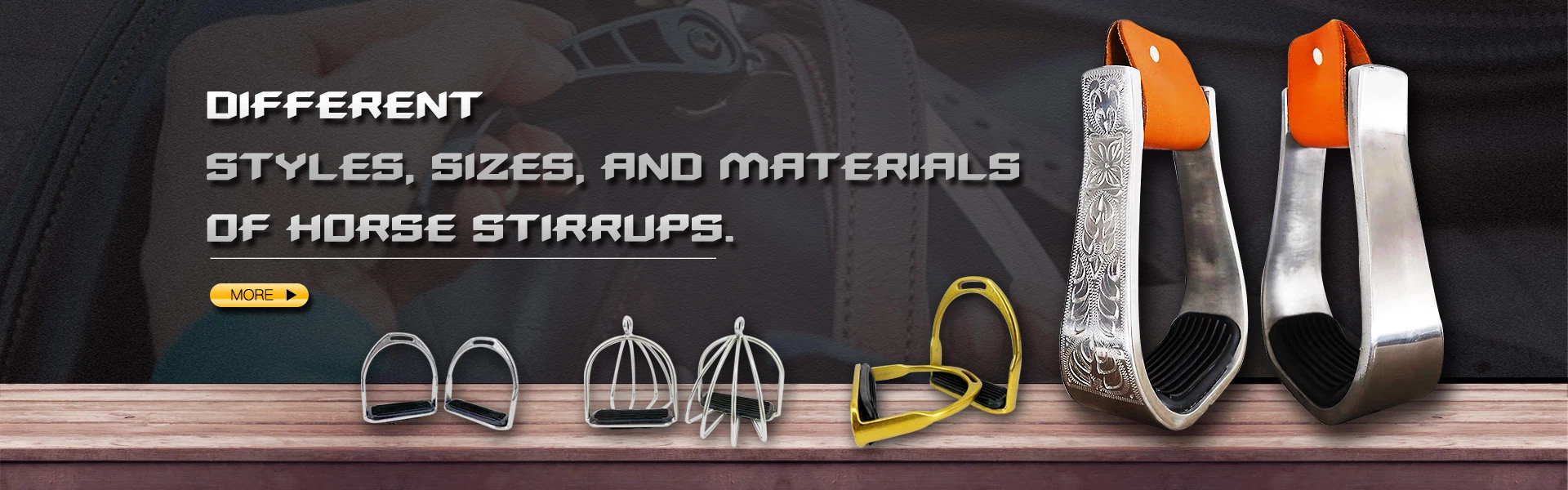
A stirrup is a pair of feet attached to either side of a saddle, used by the rider to step on the horse when mounting and riding. The role of stirrups is not only to help people mount, but also to support the rider's feet when riding, so as to maximize the advantages of riding, while effectively protecting the safety of the rider. The earliest stirrups were unilateral, and gradually evolved into bilateral with the development of time, further freeing the hands of the rider, and its appearance changed history to some extent.
According to archaeological findings, China at the latest in the Western Han Dynasty had a substitute for iron stirrups - cloth stirrups, from the Western Han Dynasty frescoes can be seen, Westerners after the invasion of Eastern nomads gradually equipped with stirrups, thus giving birth to a new social class - the medieval knight noble class. Chariots were gradually replaced by more mobile cavalry in the Qin and Han dynasties. By the Tang Dynasty, cavalry had become the main war arm and was used in large-scale operations. It was with the powerful cavalry that the Tang Dynasty defeated the Eastern and Western Turks, Xue Yantuo, Gaochang, Tuyuhun and other nomadic ethnic groups in one blow, creating a large-scale war miracle of agricultural ethnic victory over nomadic ethnic groups. Stirrups are mostly made of iron in order to make the stirrups stronger and not fall off. According to murals and other cultural relics unearthed in Mobei, the Xiongnu people may be the first people to use stirrups. The greatest function of the stirrups was to free both hands, and the cavalry could rely on their feet to control the balance of the horse, thrust, split, and strike, greatly improving the combat effectiveness of the cavalry, and possibly defeat the Han Dynasty. The Western Jin Dynasty had a single stirrup, and the Eastern Jin Dynasty had a double stirrup.
A Brief Introduction To The Stirrup
Sep 29, 2023
Leave a message