

Figure-eight stirrups. The shape of the whole stirrup is like the Arabic numeral 8, the small curved circle above is the nose for the control, and the lower is the pin ring. D-type stirrups are metal, generally made of iron. The stirrups can be divided into two subtypes.
Da type: the stirrup nose and the connecting part of the transverse ring do not cross, mostly forming a round or flat circular nose above the stirrup ring. This type of stirrup is also different in the morning and evening, and the morning and evening change is mainly reflected in the neck and the width of the pedal, which can be divided into two types.
·DaI: long-necked figure-8 stirrups. There is a long neck between the stirrup nose and the wrong ring, which obviously mimics the straight handle crossing stirrup in shape, and the pedal is slightly wider than the thickness of the stirrup body.
·DaII type: neck-less figure-8 stirrups. There is no neck between the stirrup nose and the carved ring, and the pedal is set in the thickness of the stirrup body, with an increasing tendency to widen, late or with decoration.
Db type: the connecting part of the stirrup ring and the transverse nose adopts the crimping process, and the stirrup nose is round or triangular.
The figure-eight stirrups originated in southern Siberia and were first seen in the 6-7 centuries, and later spread to Central Asia and the vast areas of Europe. The stirrups never seem to have spread east and have not been found in China, the Korean Peninsula or Japan. The figure-8 stirrups have distinct regional characteristics and are made with western traditional forging technology. The metal stirrups with straight handles are usually made of Oriental traditional casting. Early forms of the figure-eight stirrups clearly mimicked the straight shank traversal stirrups. Because the long straight shank stirrups were not suitable for forging, the long-necked figure-8 stirrups were quickly replaced by neck-less figure-8 stirrups.
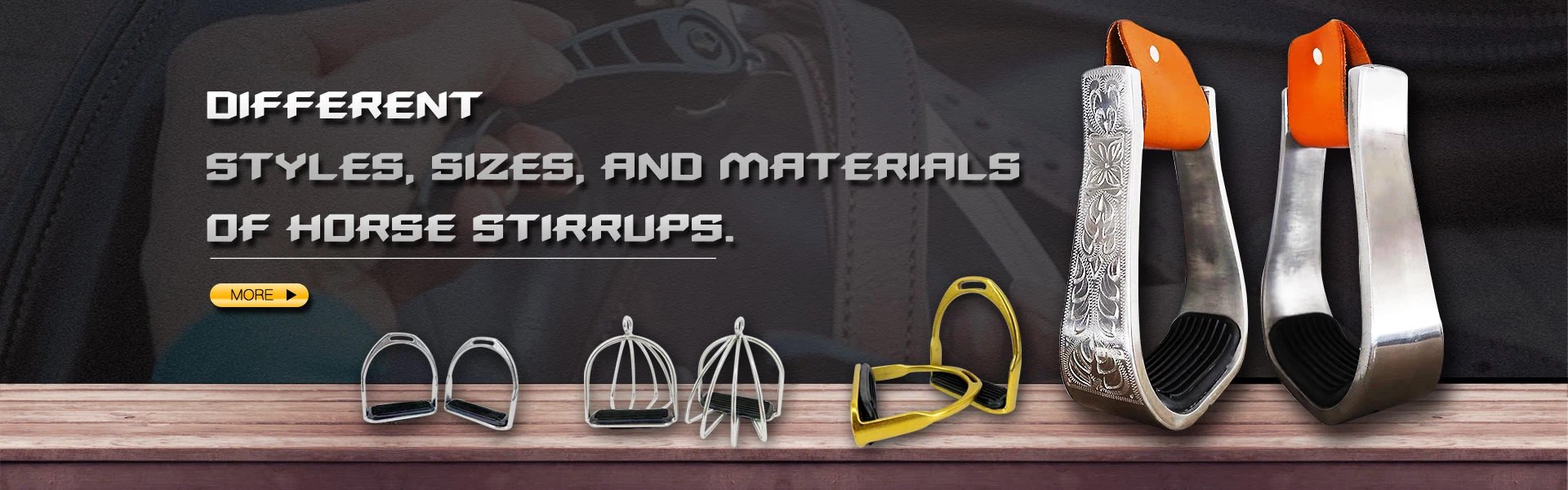
Type D Stirrups
Oct 12, 2023
Leave a message