

Hey there, fellow horse enthusiasts! I'm a supplier of English horse bits, and today I wanna dig deep into the differences between English and Western horse bits. It's a topic that's super important for anyone who rides or takes care of horses, as the right bit can make a world of difference in your horse's comfort and performance.
Let's start with the basics. English and Western riding styles have their own unique histories, purposes, and techniques, and these differences are reflected in the design and function of the bits used in each style.
Design Differences
English bits are generally more refined and intricate in design. They often feature smaller mouthpieces and lighter shanks. The goal of English bits is to provide subtle, precise communication between the rider and the horse. For example, the Stainless Steel Full Cheek Jointed Snaffle Bit With Copper Rollers is a classic English bit. The full - cheek design helps to keep the bit in place in the horse's mouth, and the copper rollers can be a nice tactile sensation for the horse, encouraging a softer mouth.
On the other hand, Western bits are usually larger and more substantial. They have bigger mouthpieces and heavier shanks. Western riding often involves more open - range work, roping, and cattle herding, so the bits are designed to give the rider more leverage and control over a larger area. A Western curb bit, for instance, has a long shank that can apply significant pressure when the rider pulls on the reins.
Mouthpiece Variations
The mouthpieces of English and Western bits also differ greatly. English bits come in a wide variety of mouthpiece styles, each with its own purpose. The loose - ring snaffle is a very common English bit. The Stainless Steel Loose Ring Snaffle has rings on either side of the mouthpiece that move freely. When the rider pulls on the reins, the rings can rotate and create a gentle, even pressure on the horse's lips and bars of the mouth.
In Western bits, the mouthpieces are often thicker and more rigid. Some Western bits have a port, which is a raised section in the middle of the mouthpiece. The port can apply pressure to the horse's tongue and palate, giving the rider more control. Western bits may also have smooth or textured mouthpieces, depending on the horse's training and sensitivity.
Action and Communication
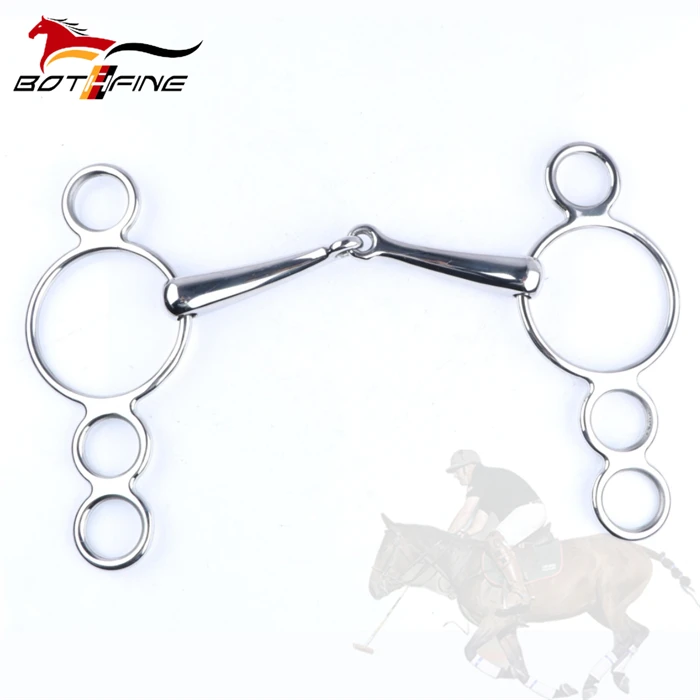
English riding emphasizes a light, indirect rein aid. The rider uses subtle movements of the hands and fingers to communicate with the horse. English bits are designed to transmit these delicate signals effectively. For example, a gag bit in English riding, like the 8 Rings Stainless Steel Gag Bits, can provide a more complex form of communication. The gag action can create a combination of poll pressure and mouth pressure, allowing the rider to ask for more collection and elevation from the horse.
Western riding, however, relies more on direct rein aids and a stronger, more definitive pull on the reins. Western bits are built to handle these more forceful actions. The curb chain on a Western curb bit, for example, adds an extra element of control. When the rider pulls on the reins, the curb chain tightens under the horse's chin, applying pressure that can be used to slow the horse down or turn it.
Training and Use
English bits are commonly used in disciplines such as dressage, show jumping, and eventing. In dressage, the horse is expected to perform a series of precise movements, and the English bit helps the rider to guide the horse through these maneuvers with finesse. Show jumping requires quick, responsive movements, and the right English bit can give the rider the control they need to navigate the jumps safely.
Western bits are essential in Western - style events like rodeo, cutting, and reining. In rodeo, the cowboy needs to be able to control the horse during high - speed runs and sudden stops. Western bits are designed to withstand the rigors of these intense activities and provide the necessary control.
Comfort for the Horse
Both English and Western bits are designed with the horse's comfort in mind, but they approach it in different ways. English bits tend to focus on distributing pressure evenly across the horse's mouth to avoid causing pain or discomfort. The smaller mouthpieces and lighter construction can be less intrusive for the horse.

Western bits, while they may seem more substantial, also aim to be comfortable. The larger mouthpieces are often shaped to fit the horse's mouth more naturally, and the materials used are usually smooth and non - abrasive.
So, why should you choose English horse bits from me? Well, I understand the importance of quality and comfort when it comes to horse bits. All of my English horse bits are made from high - quality materials like stainless steel, which is durable and resistant to corrosion. I offer a wide range of styles, from simple snaffles to more complex gag bits, so you can find the perfect bit for your horse's needs and your riding style.
If you're interested in purchasing English horse bits or have any questions about which bit would be best for your horse, don't hesitate to reach out. I'm here to help you make the right choice and ensure that your horse is happy and comfortable in the saddle.
References
- "The Complete Guide to Horse Bits" by an unknown equestrian expert
- Various equestrian magazines and online forums discussing horse bit design and use.