

As a supplier of D Ring Snaffle Bits, I've spent a significant amount of time observing horses' reactions to different bits. The D Ring Snaffle Bit is a popular choice among equestrians due to its simplicity and perceived mildness. However, not all horses take to it equally well. In this blog, I'll discuss the signs that indicate a horse doesn't like D Ring Snaffle Bits.
1. Behavioral Signs
Head Tossing
One of the most obvious signs is head tossing. When a horse repeatedly tosses its head while wearing a D Ring Snaffle Bit, it's often a sign of discomfort. The bit may be pinching the horse's lips, or the pressure it exerts on the bars of the mouth might be too intense. Head tossing is the horse's way of trying to relieve this discomfort. For example, if you're riding and notice your horse suddenly starts tossing its head more frequently than usual, it could be a reaction to the bit.

Resistance to the Bridle
If a horse resists having the bridle with the D Ring Snaffle Bit put on, it's a red flag. This could manifest as turning its head away, opening its mouth wide to avoid the bit, or even backing up when it sees the bridle. Horses are creatures of habit and comfort, and if they associate the bit with pain or discomfort, they'll try to avoid it.
Gaping or Opening the Mouth
A horse that constantly gapes or opens its mouth while wearing a D Ring Snaffle Bit is likely trying to get away from the pressure. The bit might be too wide, too thick, or the wrong shape for the horse's mouth. This behavior can also lead to a loss of control for the rider, as the horse is not properly accepting the bit.
Pulling or Running Through the Bit
When a horse pulls hard on the reins or runs through the bit, it could be a sign that it doesn't like the feel of the D Ring Snaffle Bit. The horse may be trying to escape the pressure by increasing its speed or pulling against the reins. This can be dangerous for both the horse and the rider, as it can lead to a loss of control and potential accidents.
2. Physical Signs
Salivation
Excessive salivation can be a sign of discomfort caused by the D Ring Snaffle Bit. While some horses may salivate normally when working, an increase in salivation could indicate that the bit is irritating the horse's mouth. The bit might be rubbing against the gums or tongue, causing the horse to produce more saliva as a natural response to irritation.
Bit Marks or Abrasions
Inspect the horse's mouth regularly for bit marks or abrasions. If you notice redness, cuts, or sores on the lips, bars, or tongue, it's a clear sign that the D Ring Snaffle Bit is causing physical damage. These marks can be painful for the horse and may lead to infections if not treated promptly.
Swelling
Swelling in the horse's mouth, especially around the area where the bit sits, is a serious concern. It could be a sign of an allergic reaction to the material of the bit or excessive pressure. Swelling can make it difficult for the horse to eat and drink, and it requires immediate veterinary attention.
3. Performance Signs
Poor Performance
A horse that doesn't like the D Ring Snaffle Bit may show a decline in performance. It may be less responsive to the rider's cues, have a choppy or uneven gait, or be reluctant to perform certain maneuvers. For example, if a horse was previously jumping well but suddenly starts refusing jumps or knocking down poles, the bit could be a contributing factor.
Lack of Engagement
When a horse is uncomfortable with the bit, it may disengage from the work. It may seem lethargic, uninterested, or not fully committed to the task at hand. This lack of engagement can be frustrating for the rider and can prevent the horse from reaching its full potential.
Alternatives to D Ring Snaffle Bits
If you notice any of these signs in your horse, it may be time to consider an alternative bit. There are many different types of bits available, each with its own unique design and function. Some popular alternatives include:
- TRADITIONAL LOOSE RING BITS: These bits have a looser ring design, which can provide more freedom of movement for the horse's head. They are often considered milder than D Ring Snaffle Bits and may be a good option for horses that are sensitive to pressure.
- Stainless Steel Full Cheek Jointed Snaffle Bit With Copper Rollers: The copper rollers on this bit can provide a gentle massage to the horse's mouth, which can be soothing. The full cheek design also helps to keep the bit in place and provides more control for the rider.
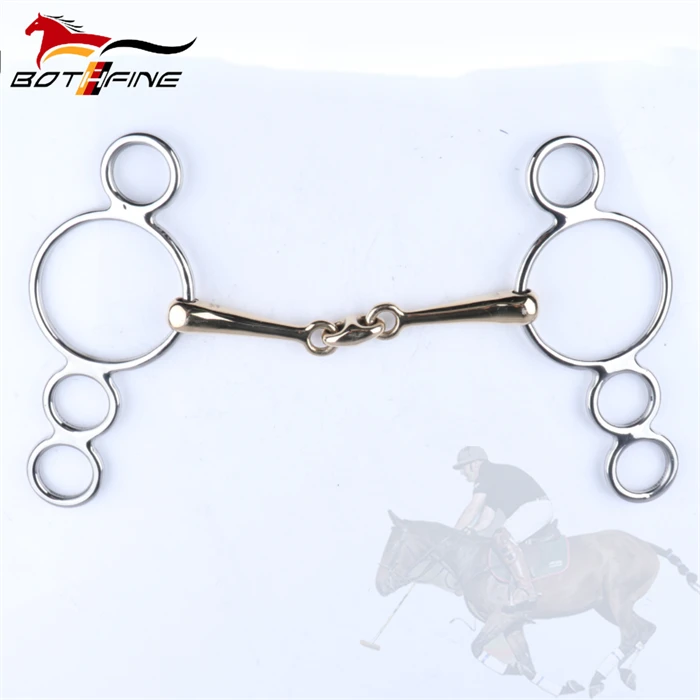
- Show Jump French Link 4 Ring Gag: This bit is designed for more advanced riders and horses. It provides more leverage and control, but it should be used with caution as it can be more severe than a D Ring Snaffle Bit.
Conclusion
As a D Ring Snaffle Bit supplier, I understand the importance of finding the right bit for your horse. It's essential to pay attention to your horse's behavior, physical condition, and performance to determine if the D Ring Snaffle Bit is the right choice. If you notice any of the signs mentioned above, don't hesitate to try a different bit. Remember, a happy and comfortable horse is more likely to perform well and have a long and healthy life.
If you're looking for high-quality bits for your horse, I'm here to help. I offer a wide range of D Ring Snaffle Bits and other types of bits to suit every horse's needs. Contact me to discuss your requirements and find the perfect bit for your equine partner.
References
- "The Principles of Horse Training" by John Lyons
- "The Complete Guide to Horse Bits" by Mark Rashid
- "Equine Dentistry" by Thomas J. Divers and Clinton D. Mackay