

Hey there, fellow horse enthusiasts! As a supplier of Western Horse Spurs, I've been in the business long enough to know that getting the right fit for these spurs is super important. You might be wondering, "How on earth can I tell if Western Horse Spurs are too big or too small?" Well, stick around, and I'll break it down for you.
Understanding the Basics of Western Horse Spurs
First off, let's talk a bit about what Western Horse Spurs are. They're not just some fancy accessories for riders; they're a tool that helps communicate with your horse. When used correctly, spurs can give your horse gentle cues to move forward, turn, or respond to your commands. But if they're the wrong size, they can cause more harm than good.
There are different types of Western Horse Spurs out there. You've got Men's Western Spurs, which are designed with men in mind, often with a more rugged look and feel. Then there are Western Boot Spurs, which are specifically made to fit nicely on Western boots. And if you're into a more vintage style, ANTIQUE SPUR HORSE RIDING SPURS might be your thing.
Measuring the Band
One of the key parts of a spur is the band, which wraps around your boot. To figure out if the spur is the right size, you need to measure the circumference of your boot at the point where the spur will sit. Usually, this is around the ankle area. You can use a flexible measuring tape for this.
If the band is too big, the spur will slide around on your boot. This can be really annoying because it won't stay in the right position to give your horse the proper cues. Plus, it might even hit your horse in the wrong place, which can startle or hurt the poor animal.
On the other hand, if the band is too small, it'll be really tight on your boot. You might have a hard time getting the spur on and off, and it could even cut off circulation to your foot. That's definitely not a good situation!
Checking the Rowel Size
The rowel is the rotating part at the end of the spur. Its size also matters a lot. A rowel that's too big can be overly harsh on your horse. It might dig in too deeply and cause pain or injury, especially if you're not using the spur correctly.
A small rowel, on the other hand, might not be effective enough. Your horse might not even feel the cue, and you'll end up having to use more force, which isn't ideal either.
When you're looking at the rowel size, think about your horse's sensitivity. Some horses are more sensitive than others, so you might need a smaller rowel for a more delicate horse.
Considering the Shank Length
The shank is the part that connects the band to the rowel. The length of the shank can affect how the spur interacts with your horse. A long shank gives you more leverage, which means you can apply more pressure with less effort. But if it's too long, it can be difficult to control and might hit your horse in an unintended way.
A short shank is more precise but doesn't offer as much leverage. If you're a beginner rider, a shorter shank might be a better choice because it's easier to manage.
Trying Them On
The best way to determine if Western Horse Spurs are the right size is to try them on. Put them on your boots and walk around a bit. See how they feel. Do they stay in place? Are they comfortable?
When you're in the saddle, pay attention to how the spurs interact with your horse. Do they give the right amount of pressure? Does your horse respond appropriately?
If you're not sure, you can also ask an experienced rider or a trainer for their opinion. They've probably been in the same situation and can give you some valuable advice.
Looking for Signs of a Bad Fit
There are some tell - tale signs that your spurs are the wrong size. If you notice any red marks or sores on your boot where the spur is sitting, it's a sign that the band is too tight. If the spur keeps slipping down or moving around on your boot, the band is likely too big.

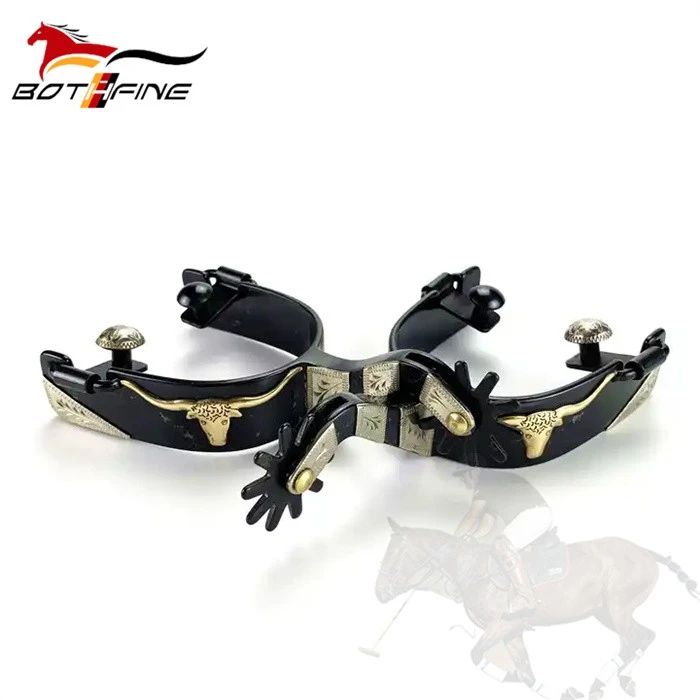
On your horse, if you see your horse flinching or reacting more strongly than usual when you use the spurs, it could be because the rowel is too big or the shank is too long.
Why the Right Fit Matters
Getting the right fit for your Western Horse Spurs is crucial for several reasons. First of all, it's about the well - being of your horse. A properly fitting spur allows you to communicate with your horse effectively without causing unnecessary pain or stress.
It also affects your riding experience. If your spurs are comfortable and fit well, you'll be able to focus on your riding and have a better connection with your horse.
Conclusion
So, there you have it! Determining if Western Horse Spurs are too big or too small involves looking at the band size, rowel size, shank length, and trying them on. It's all about finding that perfect balance for you and your horse.
If you're in the market for some high - quality Western Horse Spurs, I'm here to help. Whether you're looking for Men's Western Spurs, Western Boot Spurs, or ANTIQUE SPUR HORSE RIDING SPURS, I've got a great selection. If you have any questions or want to discuss your options for a purchase, don't hesitate to reach out. I'm always happy to chat and help you find the perfect spurs for your needs.
References
- "The Complete Guide to Horse Riding Equipment" by Horse Riding Experts
- "Western Riding 101" magazine articles on spurs and their proper use.