

Horse bits are an integral part of equestrian equipment, playing a crucial role in communication between the rider and the horse. One aspect that often goes unnoticed but is of significant importance is how horse bits affect a horse's chewing. As a leading supplier of horse bits, I have witnessed firsthand the impact different types of bits can have on a horse's chewing behavior and overall well - being.
The Natural Chewing Behavior of Horses
Before delving into how bits affect chewing, it's essential to understand the natural chewing behavior of horses. In the wild, horses spend a large portion of their day grazing. This continuous chewing action not only helps them break down food but also has several physiological benefits. Chewing stimulates saliva production, which aids in the digestion process. It also helps keep the horse's teeth in good condition by wearing them down evenly.
When a horse is ridden with a bit in its mouth, this natural chewing pattern can be disrupted. Bits can cause discomfort, pain, or changes in the way the horse moves its jaw, all of which can affect chewing.
Types of Horse Bits and Their Impact on Chewing
Snaffle Bits
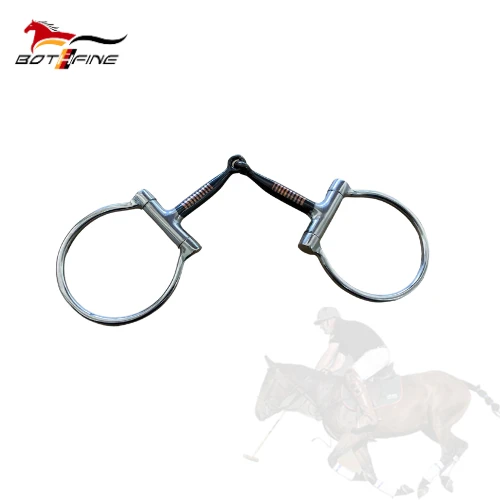
Snaffle bits are one of the most common types of bits used in horse riding. They typically have a single or double jointed mouthpiece. The Stainless Steel Tom Thumb Snaffle Bit is an example of a popular snaffle bit.
Single - jointed snaffle bits can sometimes cause the horse to feel a pinching sensation when pressure is applied. This can lead to the horse clenching its jaw instead of chewing naturally. The pressure on the corners of the mouth can be uncomfortable, and the horse may try to avoid this discomfort by restricting its jaw movement.
Double - jointed snaffle bits, on the other hand, tend to distribute pressure more evenly across the horse's mouth. This can allow for a more natural chewing motion. However, if the bit is too thick or the joints are too rigid, it can still interfere with the horse's ability to chew freely.
Curb Bits
Curb bits are more complex than snaffle bits and are often used in Western riding. They rely on leverage to apply pressure to the horse's mouth, chin, and poll. The Western Sweet Iron Ring Stainless Steel Horse Black Mouth Bit is a type of curb bit.
Curb bits can have a significant impact on a horse's chewing. The leverage action can cause a strong pressure on the horse's bars (the area between the front and back teeth) and the curb chain can put pressure on the chin. This can make it very difficult for the horse to open its mouth and chew properly. Horses may show signs of discomfort, such as head tossing or resistance, which can further disrupt their normal chewing behavior.
Full Cheek Bits
Full cheek bits, like the Full Cheek Golden Single Jointed Snaffle Bit, have a unique design with cheeks that extend down the sides of the horse's face. These cheeks are intended to keep the bit in place and prevent the reins from sliding through the rings.
The full cheek design can affect chewing in different ways. On one hand, it can provide more stability and prevent the bit from moving around too much in the horse's mouth, which can be beneficial for maintaining a more consistent chewing pattern. On the other hand, if the cheeks are too large or the bit is not fitted correctly, they can interfere with the horse's jaw movement and restrict chewing.
Material of the Bit and Chewing
The material of the bit also plays a role in how it affects a horse's chewing.
Sweet Iron Bits
Sweet iron bits, such as the Western Sweet Iron Ring Stainless Steel Horse Black Mouth Bit mentioned earlier, have a unique property. When exposed to saliva, sweet iron oxidizes, creating a slightly sweet taste. This can encourage the horse to chew more as it is attracted to the taste. However, the oxidation process can also lead to the formation of rust, which can be sharp and cause discomfort or even injury to the horse's mouth if not properly maintained.
Stainless Steel Bits
Stainless steel bits are popular because they are durable and resistant to rust. They are generally smooth and do not have a strong taste. While they may not actively encourage chewing like sweet iron bits, they also do not cause the same potential for discomfort due to rust. However, if the stainless steel bit is too cold or the surface is too hard, it can still affect the horse's chewing behavior.
Bit Fit and Chewing
Proper bit fit is crucial for a horse's comfort and its ability to chew naturally. A bit that is too small can cause pinching and discomfort in the horse's mouth, leading to restricted jaw movement and abnormal chewing. A bit that is too large can move around too much, making it difficult for the horse to keep the bit in a stable position and chew effectively.
The height of the bit in the horse's mouth is also important. If the bit is set too high, it can put pressure on the horse's front teeth, while a bit set too low can cause pressure on the back teeth. Both situations can disrupt the normal chewing process.
Recognizing Signs of Chewing Problems Caused by Bits
As a horse owner or rider, it's important to be able to recognize signs that the bit is affecting the horse's chewing. Some common signs include:
- Excessive salivation: While a certain amount of salivation is normal when a bit is in the horse's mouth, excessive salivation can be a sign of discomfort or pain.
- Jaw clenching: If the horse is clenching its jaw tightly, it may be trying to avoid the discomfort caused by the bit.
- Head tossing or shaking: This can indicate that the horse is unhappy with the bit and is trying to get rid of the discomfort.
- Reluctance to eat or drink: If the horse is experiencing pain or discomfort in its mouth due to the bit, it may be reluctant to eat or drink.
- Abnormal chewing patterns: This can include chewing on one side of the mouth more than the other or chewing in a choppy, irregular manner.
Solutions to Improve Chewing
If you notice that the bit is affecting your horse's chewing, there are several solutions you can try.
- Change the bit type: If the current bit is causing too much discomfort, switching to a different type of bit may help. For example, if a curb bit is causing problems, you could try a snaffle bit.
- Adjust the bit fit: Make sure the bit is the correct size and height for your horse. You may need to consult a professional to ensure a proper fit.
- Maintain the bit: Keep the bit clean and in good condition. If it's a sweet iron bit, make sure to clean off the rust regularly.
Conclusion
As a supplier of horse bits, I understand the importance of providing high - quality bits that not only allow for effective communication between the rider and the horse but also promote the horse's natural chewing behavior. By choosing the right type of bit, ensuring proper fit, and maintaining the bit correctly, we can help our horses chew more comfortably and maintain their overall health.

If you're interested in learning more about our range of horse bits or have any questions regarding bit selection for your horse, we're here to assist you. We invite you to contact us for further discussion and potential procurement. Our team of experts can provide personalized advice based on your horse's specific needs.
References
- Clayton, H. M. (2004). Biomechanics of the equine head, neck, and trunk. The Veterinary Clinics of North America: Equine Practice, 20(2), 273 - 294.
- McDonnell, S. M. (2003). The behavior of horses: A guide for veterinarians and equine scientists. Blackwell Publishing.