

Do Western horse bits need to be adjusted for different riding styles? This is a question that often comes up among equestrians, especially those new to Western riding. As a supplier of Western Horse Bits, I've had the opportunity to work closely with riders of all levels and disciplines, and I can tell you that the answer is a resounding yes.
Understanding the Basics of Western Horse Bits
Before delving into the need for adjustment based on riding styles, it's essential to understand the basic function of Western horse bits. A bit is a piece of equipment that goes into the horse's mouth and is used to communicate with the animal. Western bits come in a variety of styles, each designed to provide a different level of control and comfort for the horse.
One of the most common types of Western bits is the Western Ring Snaffle Bits. Snaffle bits are known for their mildness and are often used for beginner riders or horses that are just starting their training. They work by applying direct pressure to the horse's bars (the area between the front teeth and the molars) and lips.
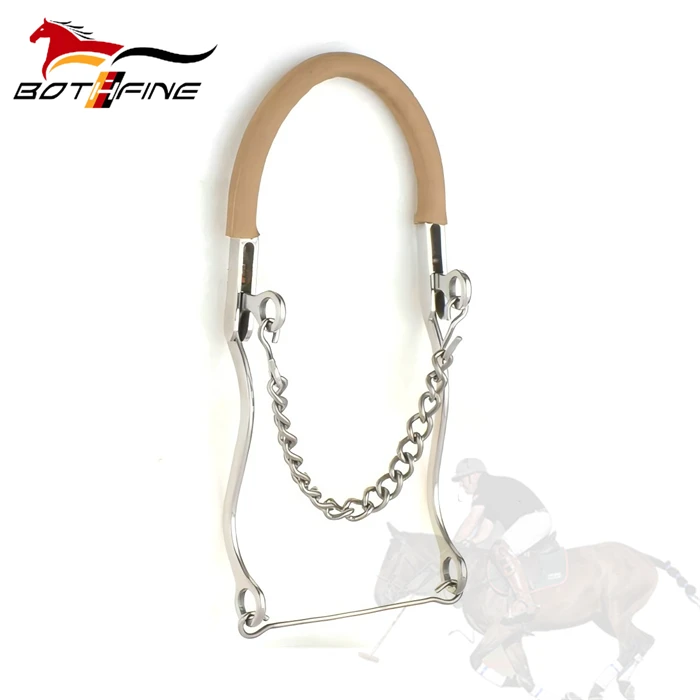
Another popular type is the Barn& Stable Pony Hackamore/Bike Chain BIT With SS Cheeks. Hackamores are bitless devices that use pressure on the nose and head to control the horse. They can be a good option for horses that are sensitive to bits or for riders who prefer a more natural approach to riding.
The Stainless Steel Curb Horse Bit is a more severe bit that is commonly used in advanced Western riding disciplines. Curb bits work by applying leverage and pressure to the horse's poll, chin groove, and bars. They require a skilled rider to use effectively and are typically used for horses that have a high level of training.

Adjusting Bits for Different Riding Styles
Now that we have a basic understanding of Western horse bits, let's explore why they need to be adjusted for different riding styles.
Trail Riding
Trail riding is a popular activity that allows riders to enjoy the outdoors and explore nature on horseback. When it comes to trail riding, comfort is key. Riders are often on their horses for extended periods, so it's important to choose a bit that won't cause discomfort or pain to the horse.
A mild snaffle bit, such as the Western Ring Snaffle Bits, is a great choice for trail riding. It provides enough control to keep the horse safe on the trail while being gentle on the horse's mouth. Additionally, the bit should be adjusted to fit the horse properly. A bit that is too tight can cause pain and discomfort, while a bit that is too loose may not provide enough control.
Ranch Work
Ranch work involves a variety of tasks, such as herding cattle, roping, and moving livestock. This type of riding requires a bit that provides more control and precision. A curb bit, like the Stainless Steel Curb Horse Bit, is often used in ranch work.
However, even with a curb bit, adjustments are necessary. The leverage and pressure applied by the bit need to be carefully calibrated to suit the horse's size, strength, and training level. A skilled rider will be able to adjust the bit to provide the right amount of control without causing excessive discomfort to the horse.
Western Pleasure
Western pleasure is a discipline that focuses on the horse's smoothness, gait, and overall appearance. In this type of riding, the bit needs to allow the horse to move freely and naturally while still maintaining control.
A combination bit that combines the features of a snaffle and a curb may be used in Western pleasure. The bit should be adjusted to encourage the horse to carry its head in a natural, relaxed position. This may involve adjusting the height of the bit in the horse's mouth and the tightness of the reins.
Reining
Reining is a high - energy discipline that involves fast turns, spins, and stops. It requires a bit that provides quick and precise control. A well - adjusted curb bit is typically used in reining.
The adjustment of the bit in reining is crucial. The rider needs to be able to apply just the right amount of pressure to get the horse to respond quickly and accurately. This may require fine - tuning the length of the shanks on the curb bit and the amount of curb chain pressure.
Factors to Consider When Adjusting Bits
When adjusting Western horse bits for different riding styles, several factors need to be considered:
Horse's Mouth Anatomy
Each horse has a unique mouth anatomy. The size and shape of the horse's bars, lips, and poll can vary significantly. A bit that fits one horse well may not fit another. It's important to measure the horse's mouth and choose a bit that is the appropriate size and shape.
Horse's Training Level
A horse's training level also plays a role in bit adjustment. A beginner horse may require a milder bit and less pressure, while a more advanced horse can handle a more severe bit and higher levels of pressure.
Rider's Skill Level
The rider's skill level is another important factor. A less experienced rider may not be able to handle a severe bit effectively and may cause more harm than good. On the other hand, a skilled rider can make the most of a bit's capabilities and adjust it to suit the horse's needs.
How to Adjust Western Horse Bits
Adjusting a Western horse bit involves several steps:
Check the Fit
First, check the fit of the bit in the horse's mouth. The bit should rest comfortably on the horse's bars, with enough room for two fingers to fit between the bit and the corner of the horse's mouth. The bit should also be level in the horse's mouth.
Adjust the Reins
The length of the reins needs to be adjusted to suit the riding style. In some disciplines, such as Western pleasure, the reins may be held longer to allow the horse to move freely. In other disciplines, like reining, the reins may be held shorter for more precise control.
Curb Chain Adjustment (if applicable)
If using a curb bit, the curb chain needs to be adjusted. The chain should be tight enough to apply pressure when the reins are pulled but not so tight that it causes discomfort to the horse. A good rule of thumb is to be able to fit one finger under the curb chain when it is in place.
The Importance of Regular Bit Checks
Once the bit is adjusted for a particular riding style, it's important to regularly check the fit and condition of the bit. The horse's mouth can change over time, and wear and tear on the bit can also affect its performance.
Regular bit checks can help prevent problems such as mouth sores, discomfort, and loss of control. If the bit shows signs of damage or if the horse seems to be uncomfortable, it may be time to replace or readjust the bit.
Conclusion
In conclusion, Western horse bits definitely need to be adjusted for different riding styles. Each riding style has its own unique requirements, and a well - adjusted bit is essential for the horse's comfort, safety, and performance.
As a supplier of Western Horse Bits, I understand the importance of providing riders with high - quality bits that can be adjusted to meet their specific needs. Whether you're a trail rider, a rancher, or a competitor in a Western discipline, I'm here to help you find the right bit and ensure that it is properly adjusted.
If you're interested in learning more about our Western horse bits or need assistance with bit adjustment, please don't hesitate to contact us. We are always happy to engage in a professional discussion about your horse's needs and how our products can help you achieve your riding goals.
References
- "The Complete Guide to Horse Bits" by Horse & Rider Magazine
- "Western Riding: A Practical Guide" by John Doe
- "Understanding Equine Anatomy for Bit Fitting" by Equine Science Journal