

Do ring leather bits have any weight specifications? That's a question I get asked a lot as a supplier of Ring Leather Bits. And the short answer is yes, but it's a bit more complicated than that.
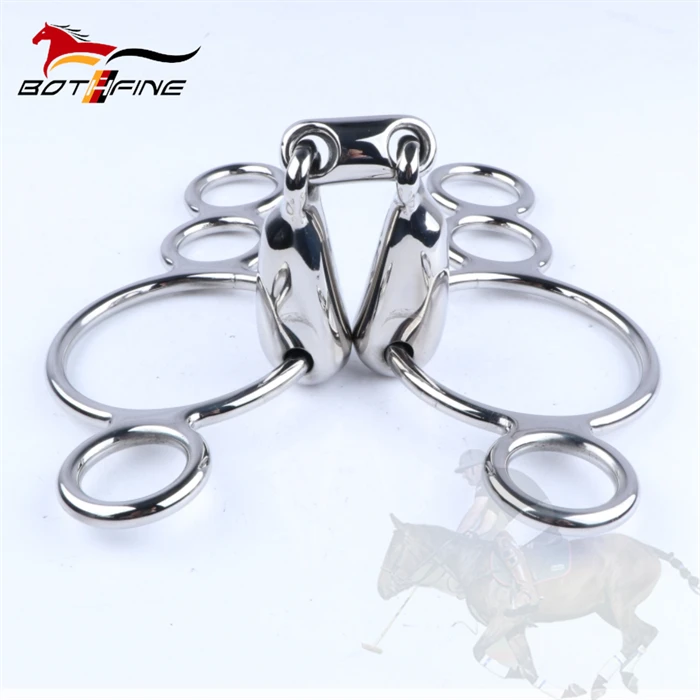

Let's start by understanding what ring leather bits are. These bits are a popular choice among horse riders, especially for those involved in English riding disciplines. They typically consist of a metal ring and a leather - covered mouthpiece. The leather provides a softer feel for the horse's mouth compared to all - metal bits, which can sometimes be harsh.
Now, when it comes to weight specifications, it's important to know that different horses have different preferences and requirements. Some horses are more sensitive to the weight of the bit in their mouth. A heavier bit might give a more pronounced signal to the horse, as the additional weight can put more pressure on the bars of the horse's mouth when the reins are pulled. On the other hand, a lighter bit might be more suitable for a horse that is easily spooked or has a very sensitive mouth.
Industry standards do exist for the weight of ring leather bits, but they are not set in stone. Generally, a standard - sized ring leather bit for an average - sized horse might weigh anywhere from 100 grams to 250 grams. This range takes into account the size of the ring, the type of leather used, and the thickness of the mouthpiece.
For example, if you're using a thick, high - quality leather, the bit is likely to be on the heavier side. Similarly, larger rings will add more weight compared to smaller ones. But these are just general guidelines. Some riders prefer a bit that is outside of this range, depending on their horse's individual needs.
As a supplier, I've seen a wide variety of requests. Some professional riders who are training young horses often prefer a lighter bit. Young horses are still learning how to respond to the rider's cues, and a lighter bit allows them to get used to the feeling of a bit in their mouth without being overwhelmed. You can check out Wholesales Premium Stainless Steel Snaffle Bits Online for some great options that come in different weights.
On the other hand, experienced horses in advanced disciplines might benefit from a slightly heavier bit. The extra weight can help the rider communicate more precisely with the horse, especially during complex maneuvers.
Another factor that affects the weight specification is the type of riding. If you're into dressage, a lighter bit might be better as it allows for more subtle communication between the rider and the horse. In contrast, for show jumping or eventing, where quick and decisive commands are needed, a slightly heavier bit could be more effective.
Let's talk about the different components of a ring leather bit and how they contribute to the weight. The ring is usually made of metal, such as stainless steel. The thickness and diameter of the ring can vary significantly. A thick - walled, large - diameter ring will weigh more than a thin - walled, small - diameter one.
The leather on the mouthpiece also plays a role. Leather comes in different grades and thicknesses. High - end, full - grain leather is denser and heavier than lower - grade leathers. Some bits even have multiple layers of leather, which can add to the overall weight.
I also want to mention that the weight of the bit is not the only factor to consider. The shape of the mouthpiece, the design of the rings, and the overall fit of the bit on the horse's mouth are equally important. For instance, an Offset Dee Bits has a different design compared to a traditional ring leather bit, and this can affect how the bit feels in the horse's mouth, regardless of its weight.
There are also specialized bits, like the Dutch Elliptical Link Gag Horse Bit. These bits are designed for specific purposes and may have their own unique weight considerations. They often have additional components, such as links and gag mechanisms, which can add to the weight and change the way the bit functions.
When it comes to choosing the right weight for your horse, I always recommend starting with the general guidelines and then making adjustments based on your horse's reaction. Watch how your horse responds to the bit. If it seems uncomfortable or is resisting, it might be a sign that the weight is not right.
It's also a good idea to consult with a professional trainer or an equine dentist. They have the experience and knowledge to help you select the best bit for your horse. They can take into account your horse's age, breed, training level, and individual personality.
As a Ring Leather Bits supplier, I'm committed to providing high - quality products that meet the diverse needs of horse riders. I understand that every horse is different, and that's why I offer a wide range of ring leather bits in various weights, shapes, and designs.
If you're in the market for a new ring leather bit, I encourage you to reach out and start a conversation. We can discuss your horse's specific requirements, and I'll do my best to find the perfect bit for you. Whether you're a beginner rider or a seasoned professional, I'm here to help you make the right choice.
References:
- Equine Dentistry textbooks
- Professional horse training manuals
- Industry - wide research on horse bit design and functionality