

Hey there, fellow horse enthusiasts! I'm an English riding spurs supplier, and I often get asked some pretty interesting questions. One that keeps popping up is, "Can I use English riding spurs on a wild - caught horse?" Well, let's dive right into this topic and break it down.
First off, let's talk a bit about wild - caught horses. These horses are, as the name suggests, captured from the wild. They haven't had the same level of human interaction and training as domesticated horses. Their instincts are still very much in tune with the wild. They're more skittish, and their responses to human cues can be quite unpredictable.
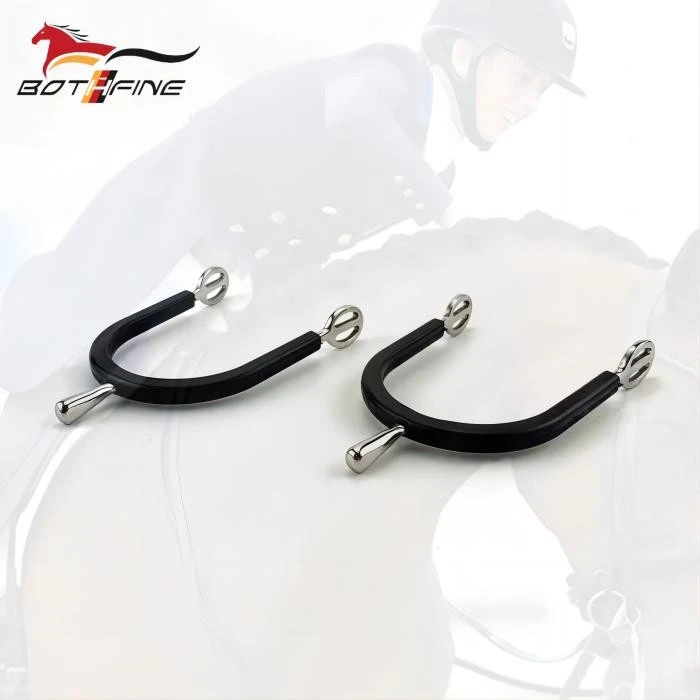
English riding spurs, on the other hand, are designed to be used as an aid for communication between the rider and the horse. They're meant to give the horse a more precise signal when the rider wants the horse to move forward, turn, or perform other maneuvers. The spurs come in different styles and materials, like the Black Onyx English Spurs, Stainless Steel English Spurs, and Equestrian English Spurs.
Now, back to the big question. Can you use English riding spurs on a wild - caught horse? The short answer is, it's a big no - no in most cases. Here's why.
Wild - caught horses are not used to the pressure and sensation of spurs. When you put spurs on and use them on a wild - caught horse, it can be extremely frightening for the animal. These horses are already on high alert because of their wild nature. The sudden, unfamiliar pressure from the spurs can trigger a flight or fight response. They might bolt, rear up, or even try to buck you off. This not only endangers the rider but also the horse itself.
Moreover, wild - caught horses need a lot of time and patience to be properly trained. The first step is to build trust with them. This involves spending hours just being around them, grooming them, and getting them used to human touch. Once they start to trust you, you can gradually introduce basic training techniques. But spurs should be the last thing on your mind during this process.
Using spurs too early can set back the training process significantly. It can create a negative association in the horse's mind between the rider and pain or discomfort. This makes it even harder to train the horse in the future.
However, there might be some rare cases where a wild - caught horse has been in human care for a long time and has gone through extensive training. In such cases, if the horse is well - behaved and responsive to other aids, you might consider using spurs. But even then, it should be done with extreme caution.
If you do decide to use spurs on a wild - caught horse that has been well - trained, start with the mildest type of spurs. The Equestrian English Spurs are a good option as they are designed to provide a gentle cue. And always, always start with very light pressure. Observe the horse's reaction closely. If the horse shows any signs of distress or discomfort, stop immediately.
Another important thing to keep in mind is that spurs should never be used as a punishment. They are an aid for communication. If you find yourself using spurs to force a horse to do something, it means there's a problem with your training methods.
As an English riding spurs supplier, I've seen a lot of riders make the mistake of thinking that spurs are a magic solution to all their riding problems. But they're not. They're just one tool in the rider's toolkit, and they need to be used correctly.
If you're dealing with a wild - caught horse, focus on building a strong foundation of trust and basic training first. Use your legs, voice, and reins as your primary means of communication. Once the horse is well - trained and responsive, you can then think about adding spurs to your riding routine.
Now, I know some of you might be thinking, "But I really want to use spurs right away." I get it. Spurs can add a certain level of precision to your riding. But when it comes to wild - caught horses, patience is key.

In conclusion, while it's technically possible to use English riding spurs on a wild - caught horse in some very specific circumstances, it's generally not a good idea. It's better to focus on the long - term training and well - being of the horse.
If you're in the market for high - quality English riding spurs for your well - trained horses, we've got a great selection. Whether you're looking for the elegant Black Onyx English Spurs or the durable Stainless Steel English Spurs, we've got you covered.
If you have any questions about our products or need advice on choosing the right spurs, feel free to reach out. We're always here to help you make the best decision for you and your horse. Let's work together to ensure a safe and enjoyable riding experience.
References
- "The Art of Horsemanship" by Xenophon
- "Horse Training Basics" by various equestrian experts