

Hey there, horse lovers! As a supplier of D Ring Snaffle Bits, I often get asked if these bits are suitable for young horses. It's a great question, and today, I'm gonna dive deep into this topic to give you all the info you need.
First off, let's talk about what D Ring Snaffle Bits are. These bits have D-shaped rings on the sides, and they're one of the most common types of bits used in horse riding. They work by applying pressure to the horse's lips, bars, and corners of the mouth when the rider pulls on the reins. The design allows for a certain amount of movement, which can make it more comfortable for the horse compared to some other types of bits.
Now, when it comes to young horses, there are a few things we need to consider. Young horses are still growing and learning, and their mouths are more sensitive than those of older, more experienced horses. So, we gotta be extra careful about what we put in their mouths.
One of the big advantages of D Ring Snaffle Bits for young horses is their simplicity. They're easy to understand for both the horse and the rider. For a young horse that's just starting to learn about the reins and cues, a simple bit like this can be a great way to introduce them to the concept of being guided. The pressure applied by the D Ring Snaffle Bit is relatively mild and even, which can help the horse learn without overwhelming them.
Another plus is that D Ring Snaffle Bits come in a variety of materials and designs. For example, we have the Full Cheek Copper Lozenge Snaffle Bit. The copper lozenge mouthpiece can be quite gentle on the horse's mouth, and the full cheeks provide some additional control by preventing the bit from sliding through the horse's mouth. This can be really useful for a young horse that might still be a bit wiggly or unsure.
On the other hand, we also have to be aware of some potential drawbacks. Just because a bit is simple doesn't mean it's always the best fit for every young horse. Some young horses might be more sensitive or have a different mouth shape that doesn't respond well to a D Ring Snaffle Bit. For instance, if a horse has a very narrow mouth, the D rings might be too wide and cause discomfort.
Also, it's important to note that the way the rider uses the reins can have a big impact on how the bit feels to the horse. A heavy-handed rider can make even the gentlest bit seem harsh. So, when using a D Ring Snaffle Bit on a young horse, the rider needs to be especially careful to use light, consistent cues.
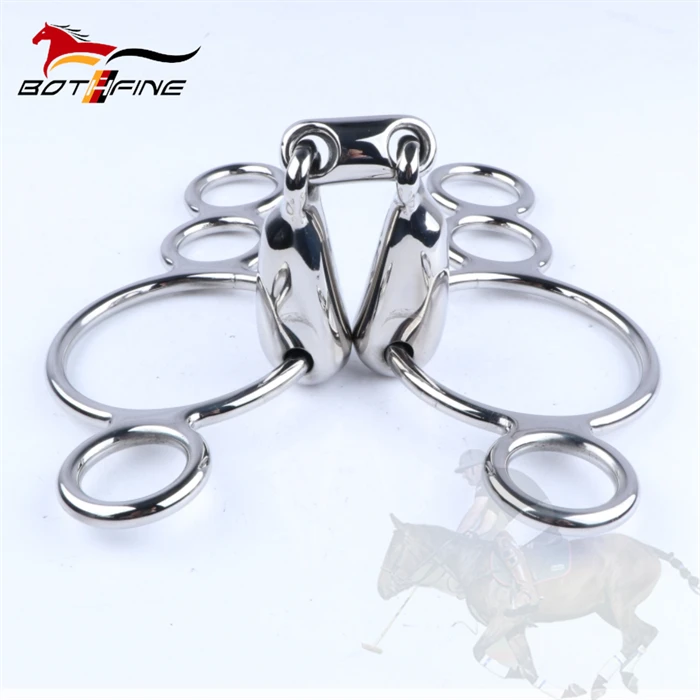
Let's compare D Ring Snaffle Bits with some other types of bits. Take the Dutch Elliptical Link Gag Horse Bit, for example. This bit is a gag bit, which means it uses a different mechanism to apply pressure. It can be more powerful and is usually used for more advanced horses that need a bit more control. For a young horse, this type of bit might be too much too soon.
Then there's the Copper Mouth Oval Link Loose Ring Snaffle Bit. This is another type of snaffle bit, but with oval links and loose rings. It offers a bit more movement and flexibility compared to a D Ring Snaffle Bit. Depending on the individual horse, this might be a better option. Some young horses might prefer the extra give in the bit.
So, are D Ring Snaffle Bits suitable for young horses? The answer is, it depends. In general, they can be a good starting point for many young horses. They're simple, relatively gentle, and come in a variety of options. But we always have to take the individual horse into account. Some young horses might do great with a D Ring Snaffle Bit right from the start, while others might need a different type of bit or a more gradual introduction.
If you're thinking about using a D Ring Snaffle Bit for your young horse, here are a few tips. First, make sure the bit fits properly. It should be the right size for the horse's mouth, not too tight or too loose. You can tell if a bit fits well if the horse can close its mouth comfortably and there are no signs of pinching or rubbing.
Second, start slow. Let the horse get used to the bit gradually. Don't expect it to understand everything right away. Spend some time just walking around with the bit in its mouth, and gradually introduce more complex cues as the horse becomes more comfortable.
Finally, pay attention to the horse's behavior. If the horse seems uncomfortable, resistant, or in pain, it might be a sign that the bit isn't the right fit. In that case, you might need to try a different type of bit or adjust the way you're using the reins.

As a supplier of D Ring Snaffle Bits, I'm always here to help. If you have any questions about which bit is best for your young horse, or if you want to learn more about our products, don't hesitate to reach out. We can have a chat about your horse's specific needs and find the perfect bit for them. Whether you're a professional trainer or a first-time horse owner, we're committed to providing high-quality bits that will help your young horse grow and learn in a comfortable and safe way. So, if you're interested in purchasing D Ring Snaffle Bits or any of our other horse bits, let's start a conversation and see how we can work together.
References:
- Equine dentistry textbooks
- Horse training manuals
- Personal experience as a D Ring Snaffle Bits supplier